
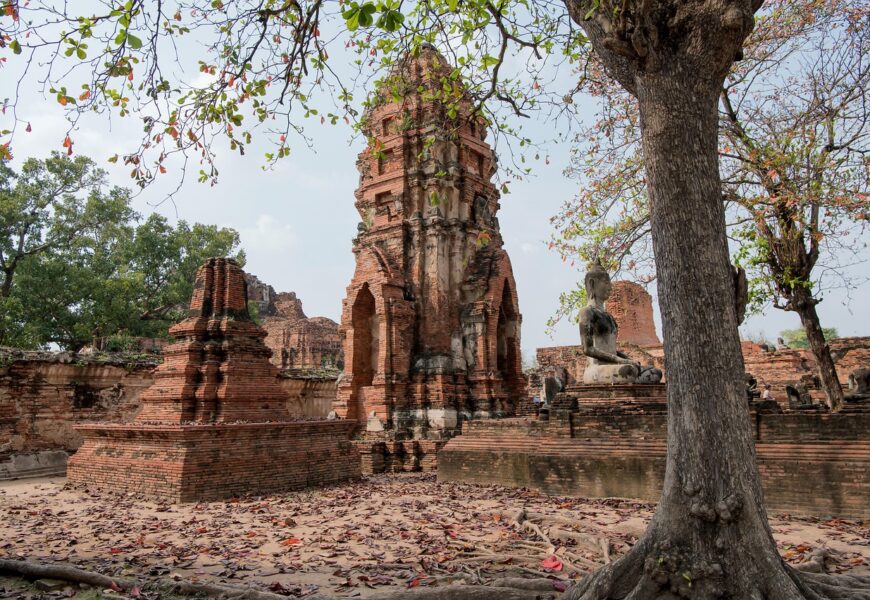
Thailand, a land of mesmerizing contrasts and profound cultural complexity, harbors stories that extend far beyond its postcard-perfect beaches and ornate temples. While millions of travelers annually explore its surface-level attractions, the nation’s true essence lies in its untold narratives—intricate tales of resilience, transformation, and cultural nuance that remain largely unexplored by casual tourists. This comprehensive exploration delves into the lesser-known dimensions of Thai society, revealing the intricate tapestry of human experiences that shape this remarkable Southeast Asian nation.
The Silent Economic Revolution
Thailand’s economic landscape represents a fascinating narrative of strategic transformation that defies conventional development trajectories. Unlike many developing nations, Thailand has masterfully navigated global economic shifts through innovative entrepreneurial strategies and targeted industrial policies. The country’s automotive and electronics manufacturing sectors have emerged as global powerhouses, with international corporations increasingly recognizing Thailand’s sophisticated technological infrastructure and skilled workforce.
Recent data from the Board of Investment of Thailand reveals that foreign direct investment in high-tech manufacturing increased by 35% between 2018 and 2022, highlighting the nation’s remarkable economic adaptability. Small and medium enterprises (SMEs) have been particularly instrumental in this evolution, representing nearly 80% of the country’s total employment and driving innovation across multiple sectors. These entrepreneurial ecosystems challenge traditional perceptions of Thailand as merely a tourism-dependent economy.
Indigenous Knowledge and Environmental Stewardship
Beneath Thailand’s environmental challenges lies a profound tradition of indigenous ecological wisdom that remains largely unrecognized by global narratives. Northern hill tribes, particularly the Karen and Hmong communities, have developed sophisticated sustainable agricultural practices that predate contemporary conservation movements by centuries. Their traditional agricultural techniques, including rotational farming and intricate water management systems, represent complex ecological knowledge that modern environmental scientists are increasingly studying and appreciating.
The Pgakenyaw community, for instance, practices a holistic land management approach that maintains biodiversity while ensuring community food security. Their traditional forest management techniques have demonstrated remarkable resilience against deforestation, with studies showing that indigenous-managed forests maintain significantly higher biodiversity compared to government-controlled conservation areas. These practices challenge Western conservation paradigms and offer alternative models of environmental stewardship.
Cultural Resistance and Identity Dynamics
Thailand’s cultural landscape is far more complex than external representations suggest, with intricate dynamics of resistance, adaptation, and transformation continuously reshaping societal norms. Urban youth movements, particularly in Bangkok, are redefining traditional concepts of Thai identity through art, digital media, and social activism. These emerging narratives challenge monolithic representations of Thai culture, emphasizing intersectionality, individual expression, and critical engagement with historical narratives.
LGBTQ+ communities, for example, have developed sophisticated strategies of cultural negotiation, creating spaces of visibility while simultaneously respecting traditional social structures. The concept of ‘kathoey’ or transgender identity in Thailand represents a nuanced understanding of gender that predates Western binary frameworks, demonstrating the culture’s historical complexity and fluidity.
Technological Innovation and Digital Transformation
Thailand’s technological ecosystem represents a dynamic frontier of innovation rarely acknowledged in mainstream international discourse. The country has emerged as a significant digital economy hub, with Bangkok increasingly positioning itself as a Southeast Asian technological innovation center. Government initiatives like the Thailand 4.0 policy have strategically invested in developing digital infrastructure, startup ecosystems, and technological education programs.
Notably, Thailand’s digital startup ecosystem has witnessed exponential growth, with venture capital investments increasing by 65% between 2019 and 2022. Fintech, healthtech, and agritech sectors have been particularly vibrant, demonstrating the nation’s capacity for sophisticated technological problem-solving. These developments challenge simplistic perceptions of Thailand as a primarily agricultural or tourism-dependent economy.
Sociocultural Resilience and Adaptation
The COVID-19 pandemic exposed Thailand’s remarkable sociocultural resilience, revealing complex community support mechanisms that transcend formal economic structures. Local communities demonstrated extraordinary adaptive capacities, rapidly transforming economic models and social interactions. Traditional markets seamlessly transitioned to digital platforms, while community-based mutual support systems emerged as critical survival strategies.
Rural communities, often marginalized in global narratives, demonstrated remarkable innovation. Agricultural cooperatives developed sophisticated digital marketing platforms, enabling farmers to directly connect with urban consumers. These grassroots innovations represent profound examples of community-driven economic transformation, challenging dominant narratives of vulnerability.
Thailand’s untold stories reveal a nation of extraordinary complexity, resilience, and continuous transformation. Beyond superficial representations, the country embodies a dynamic society constantly negotiating tradition and innovation, local identities and global influences. Understanding these nuanced narratives requires moving beyond touristic stereotypes and engaging with the profound human experiences that shape contemporary Thai society. As global perspectives evolve, Thailand stands as a testament to the power of cultural adaptability, technological innovation, and human creativity.